 Simply Amalfi Coast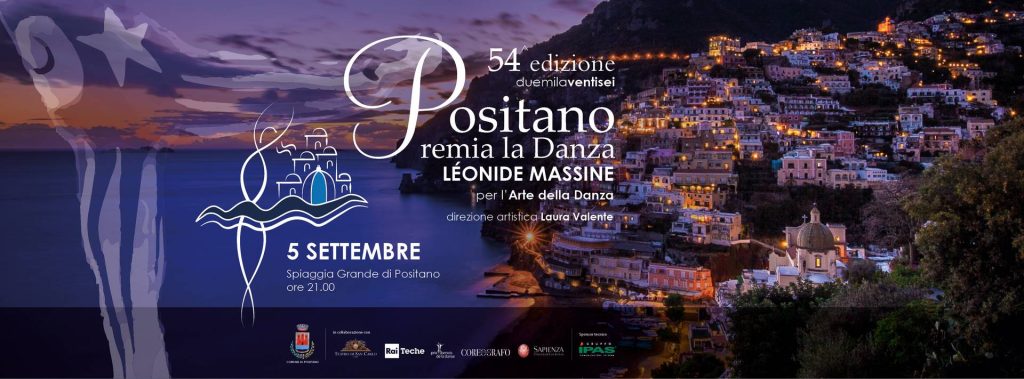
Positano and Dance: A Story That Began Long Before the
Award
There are places where art seems to naturally find a home. Positano is one of them.
Long before becoming one of the Amalfi Coast’s most iconic destinations, the village was already a meeting place for artists, writers, musicians and dancers from all over Europe.
Beginning in the 1920s, some of the most important figures of the international avant-garde began frequenting this small town suspended between the sea and the mountains.
Artists such as Pablo Picasso, Jean Cocteau and Igor Stravinsky gravitated around the world of Sergei Diaghilev and the Ballets Russes. It was a period of extraordinary creative cross-pollination, when dance, music, painting and theatre came together to create new forms of artistic expression.
One of the most celebrated examples is Parade: a work born from the collaboration of exceptional talents, with a scenario by Jean Cocteau, sets and costumes by Pablo Picasso, music by Erik Satie and choreography by Léonide Massine.
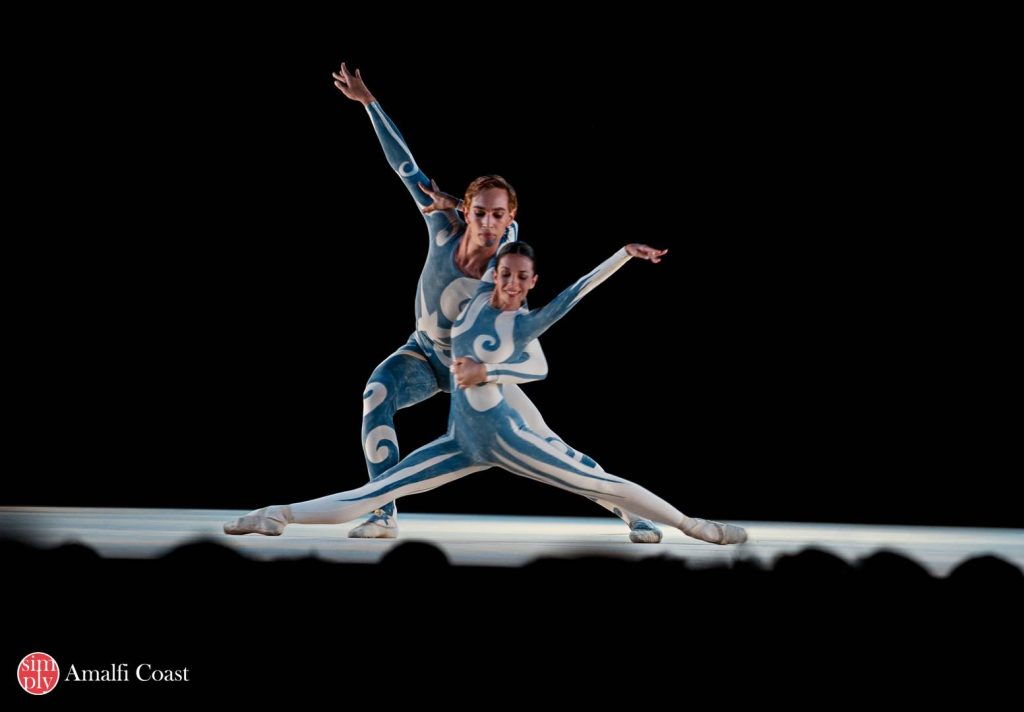
Massine, in particular, developed one of the deepest connections with Positano. A dancer and choreographer with the legendary Ballets Russes, he fell in love with this corner of the Mediterranean and became closely associated with Li Galli, the small archipelago just off the coast that he chose as a place to live, create and find refuge.
Decades later, those same islands would once again become part of dance history thanks to Rudolf Nureyev, who purchased them in 1988 and made them one of the most intimate and beloved places of his life.
Dance, therefore, was already part of Positano’s soul long before an award was created to celebrate it.
How the Premio Positano Was Born
On August 2, 1969, the bond between Positano and the world of dance took on an official form with the creation of the Premio Positano.
Ten years later, following the death of Léonide Massine, the award was named in his memory, becoming the Premio Positano Léonide Massine per l’Arte della Danza.
The choice went far beyond a simple tribute: Massine perfectly embodied the meeting point between great international dance and Positano. He was an artist accustomed to performing on the world’s most important stages, yet here he had found inspiration, beauty and a place he could call home.
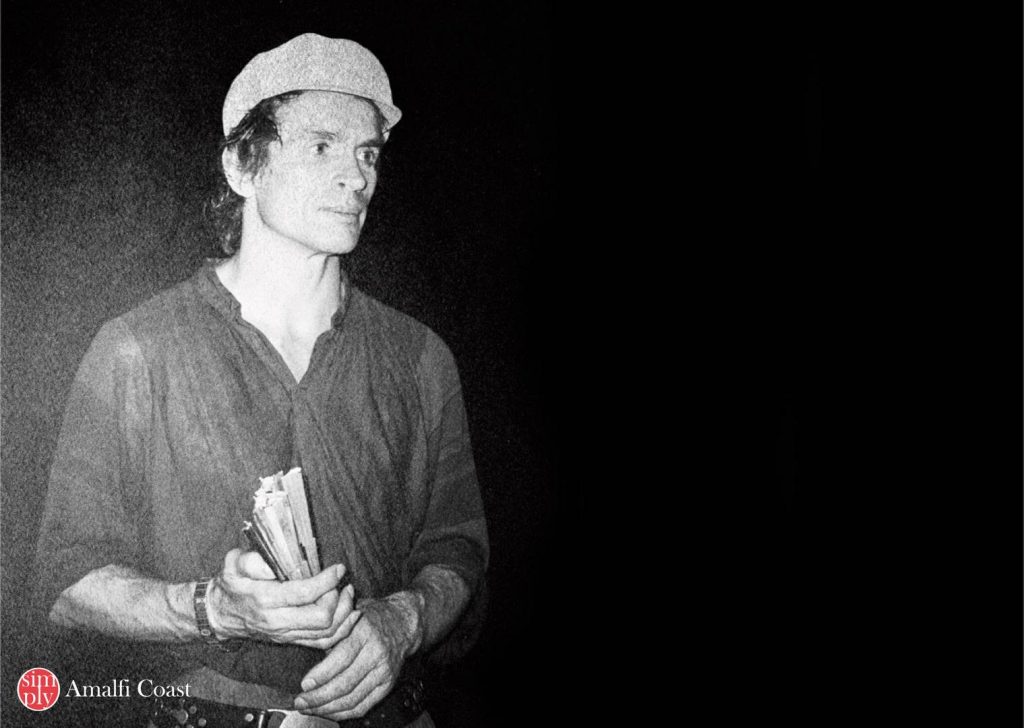
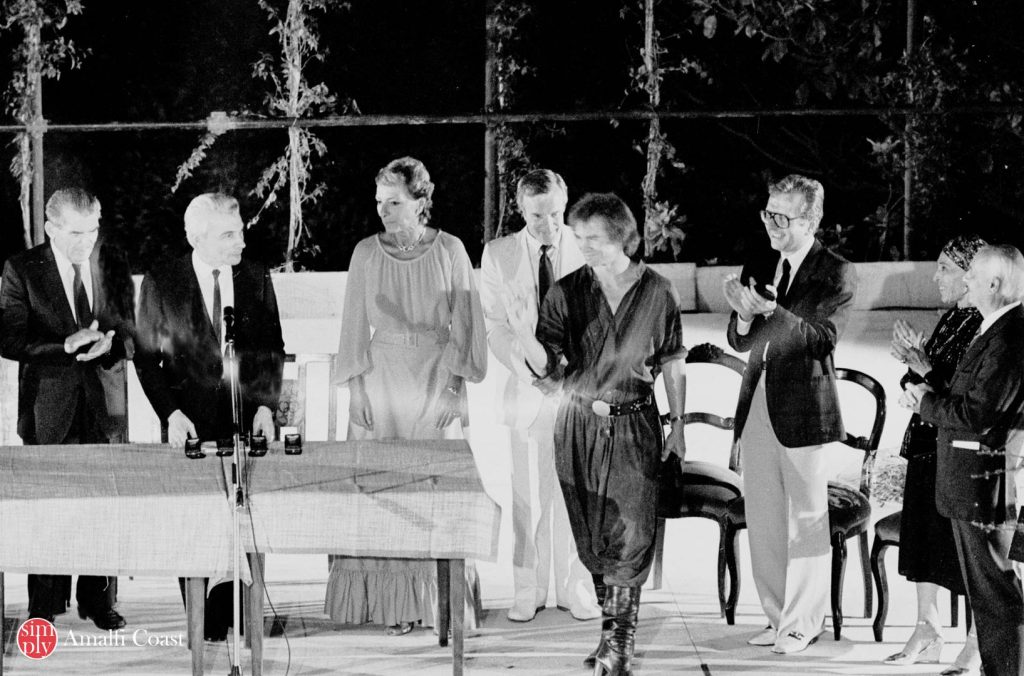
Ever since, the award has continued to renew this connection, bringing some of the most important figures on the international dance scene to Positano every year.
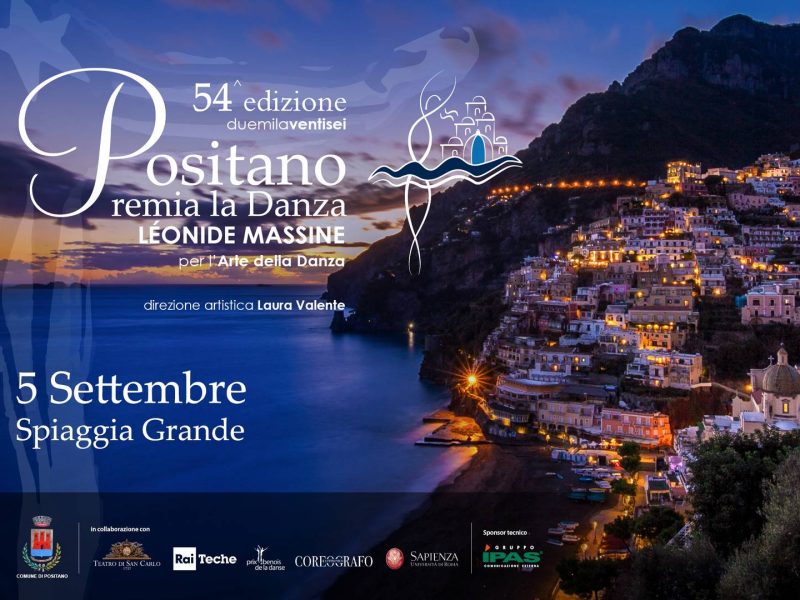
And it would be difficult to imagine a more evocative setting: Spiaggia Grande is transformed into an open-air theatre, with the illuminated houses climbing up the mountainside, the sea stretching out in front of the stage and the profile of Li Galli on the horizon.
2026: 54th Edition — Sylvie Guillem, Ballerina
Assoluta
The story of the Premio continues today, and the 54th edition, taking place on September 5, 2026, brings another extraordinary name in international dance to Positano: Sylvie Guillem, who will receive both the Lifetime Achievement Award and the title of Ballerina Assoluta.
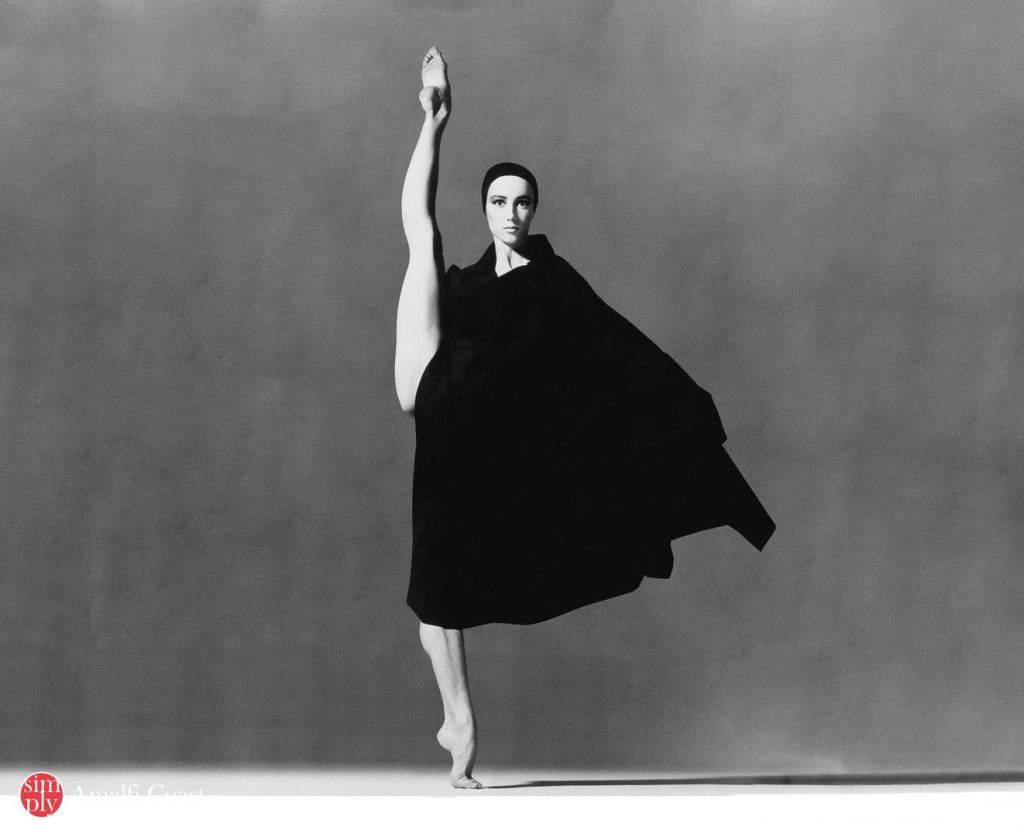
“An étoile of the Paris Opera at just 19, appointed by Rudolf Nureyev, and later a leading figure at the Royal Ballet in London, Guillem profoundly shaped the dance of her time, moving with extraordinary freedom between the classical and contemporary repertoires.”
She embodies the spirit of the award perfectly: preserving the great tradition of dance while continuing to push its boundaries.
On Saturday, September 5, Spiaggia Grande will once again be transformed into a spectacular open-air theatre, welcoming performers from some of the world’s most prestigious companies, including Royal Ballet, Paris Opera, Teatro alla Scala, Wiener Staatsballett, Staatsballett Berlin, Royal Danish Ballet and Les Ballets de Monte-Carlo.
The programme will bring together classical and contemporary dance, established stars and emerging talents, continuing the international vocation that has accompanied the Premio since its origins.
Among the most significant returns is that of Alice Mariani. Previously awarded the Premio Giovani Promesse in Positano, she returns this year to the same stage with an established career, now as Principal Dancer of Teatro alla Scala in Milan.
Her return perhaps tells the story of the event’s philosophy better than anything else: recognising talent when it is still in its early stages and, years later, seeing that same talent among the leading figures of international dance.
A Stage That Has Welcomed the Legends of International
Dance
Sylvie Guillem is simply the latest in a long line of great names whose stories have become part of the history of the Premio Positano.
Over more than half a century, generations, schools and different artistic languages have met on its stage.
Margot Fonteyn, Rudolf Nureyev, Maurice Béjart, Ekaterina Maximova, Carla Fracci, Luciana Savignano, Elisabetta Terabust, Mikhail Baryshnikov, Alicia Alonso, Roberto Bolle, Mats Ek, Jiří Kylián, Wayne McGregor, Vladimir Vassiliev, Nacho Duato and Svetlana Zakharova are just some of the personalities who have shaped the history of the event.
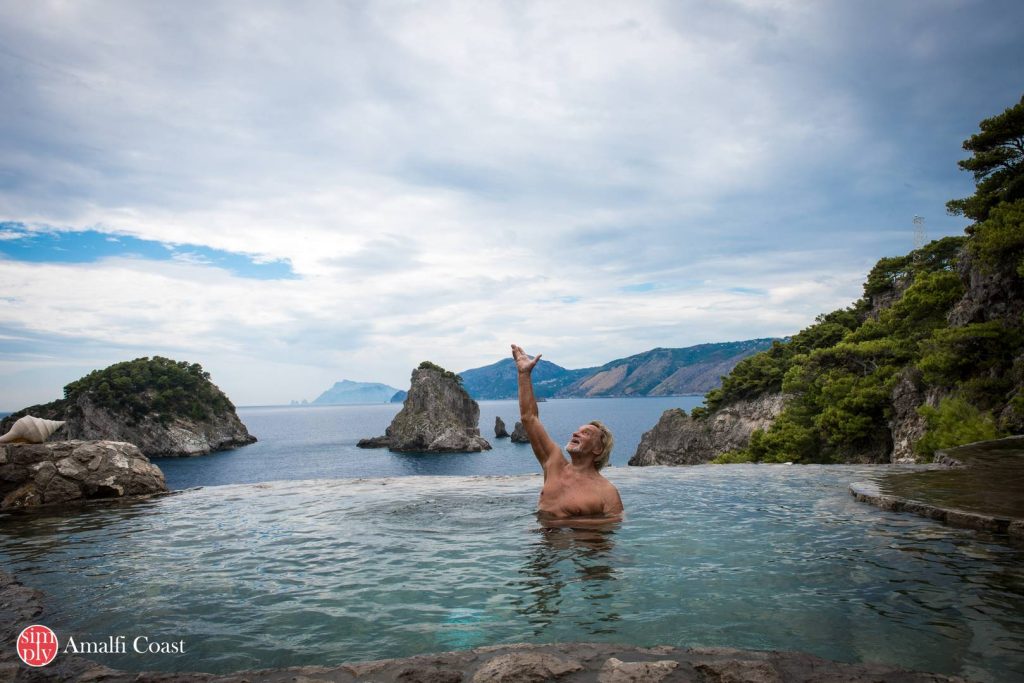
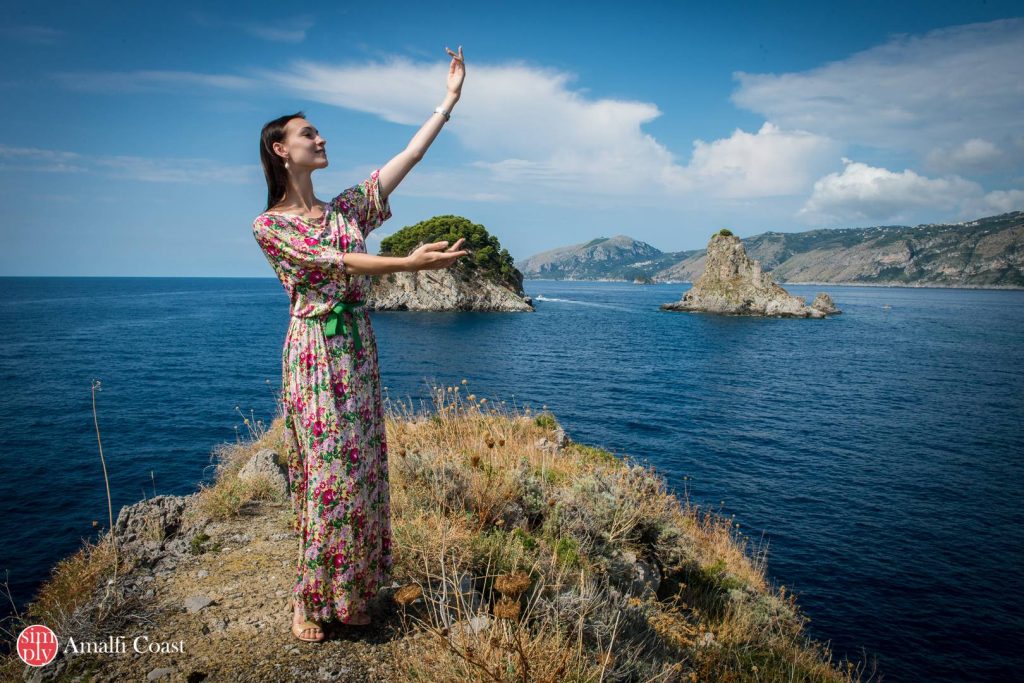
Classical dance has engaged in dialogue with contemporary dance, while tradition has met experimentation, making Positano a privileged meeting point for some of the most important figures on the international scene.
In 2021, the Premio dedicated a special edition to Carla Fracci, one of the most beloved figures in Italian ballet. In 2022, marking the 50th edition, the Lifetime Achievement Award was presented to Alessandra Ferri.
In the years that followed, figures such as Dada Masilo, Lucía Lacarra and Angelin Preljocaj also took centre stage, confirming the event’s ability to evolve while never losing its connection to its own history.
When Spiaggia Grande Becomes a Theatre
There is another protagonist that has accompanied the Premio from the very beginning: Positano itself.
For one evening, Spiaggia Grande changes completely.
The beach becomes the stage, the mountain becomes the backdrop, the lights of the houses become part of the performance, and the Mediterranean opens up before the artists. A little farther away, the silhouette of Li Galli inevitably brings to mind the stories of Léonide Massine and Rudolf Nureyev.
It is one of those rare cases in which the place and the event seem inseparable.
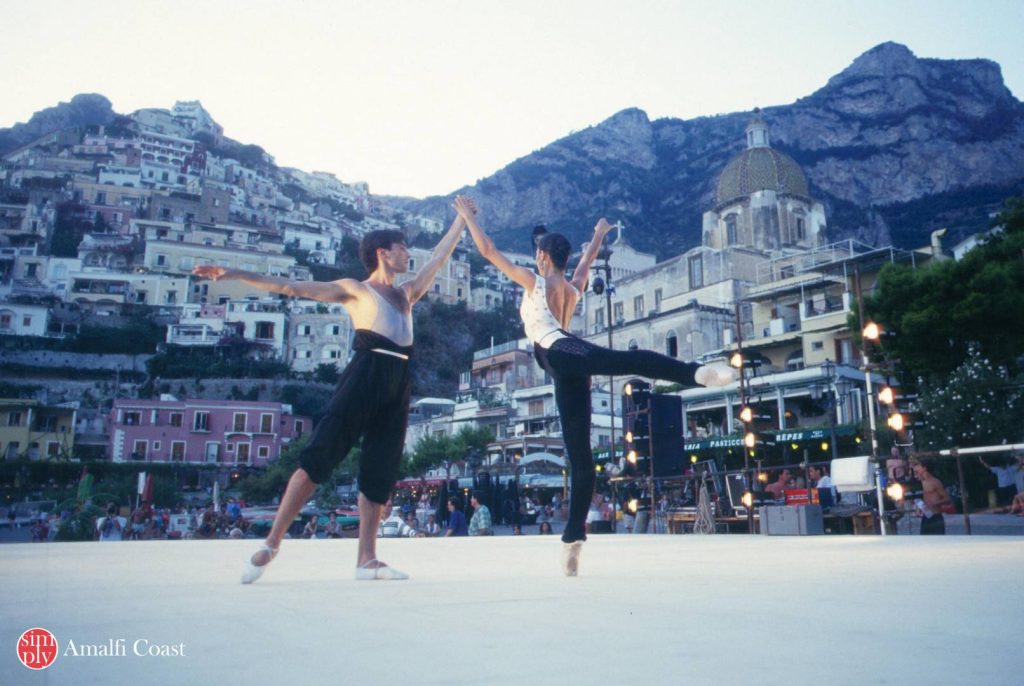
You are not simply watching a dance performance in Positano.
You are watching dance in a place that has welcomed dancers, choreographers and artists for more than a century.
A Tradition That Continues to Look to the Future
Perhaps this is the true strength of the Premio Léonide Massine: its ability to preserve an extraordinary history without turning it into mere nostalgia.
The Premio remembers and celebrates, but above all it continues to seek new languages and new protagonists.
From Massine and Nureyev to Carla Fracci, Baryshnikov, Roberto Bolle and Sylvie Guillem, and on to the young performers receiving some of the first major recognition of their careers here, each edition builds a bridge between the past, present and future.
And every year, that story returns to the place where it belongs:
on the beach of Positano, beneath the stars and facing the sea.
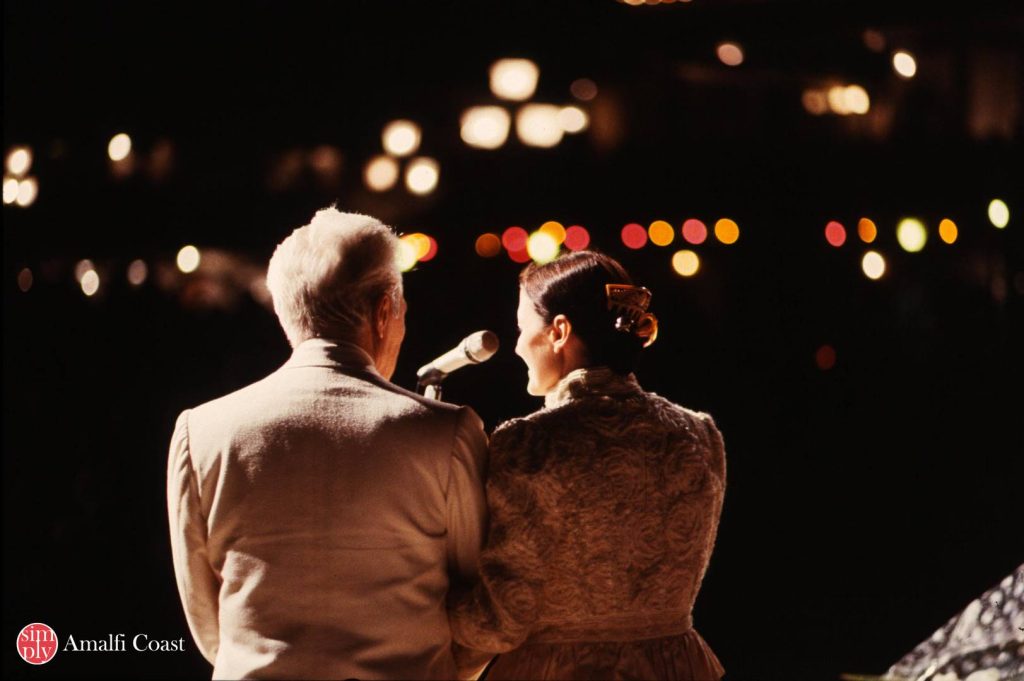
📍 A tip: If you are on the Amalfi Coast in the first days of September, take a look at the programme of the Premio Positano Léonide Massine. Even if you are not a ballet expert, watching some of the greatest performers in international dance take the stage on Spiaggia Grande is one of the most evocative cultural experiences Positano has to offer.
The Premio Positano Léonide Massine at a Glance
🩰 Essential Information
- Name: Premio Positano Léonide Massine per l’Arte della Danza
- Year founded: 1969
- Dedicated to: Léonide Massine, dancer and choreographer of the Ballets Russes
- Where: Positano, Amalfi Coast
- Main venue: Spiaggia Grande
- Focus: classical and contemporary dance, international stars and emerging talents
🌟 2026 Edition
- Edition: 54th
- Date: September 5, 2026
- Venue: Spiaggia Grande, Positano
- Lifetime Achievement Award and Ballerina Assoluta: Sylvie Guillem
- On stage: leading international performers and emerging talents
- Companies represented: Royal Ballet, Paris Opera, Teatro alla Scala, Wiener Staatsballett, Staatsballett Berlin, Royal Danish Ballet and Les Ballets de Monte-Carlo